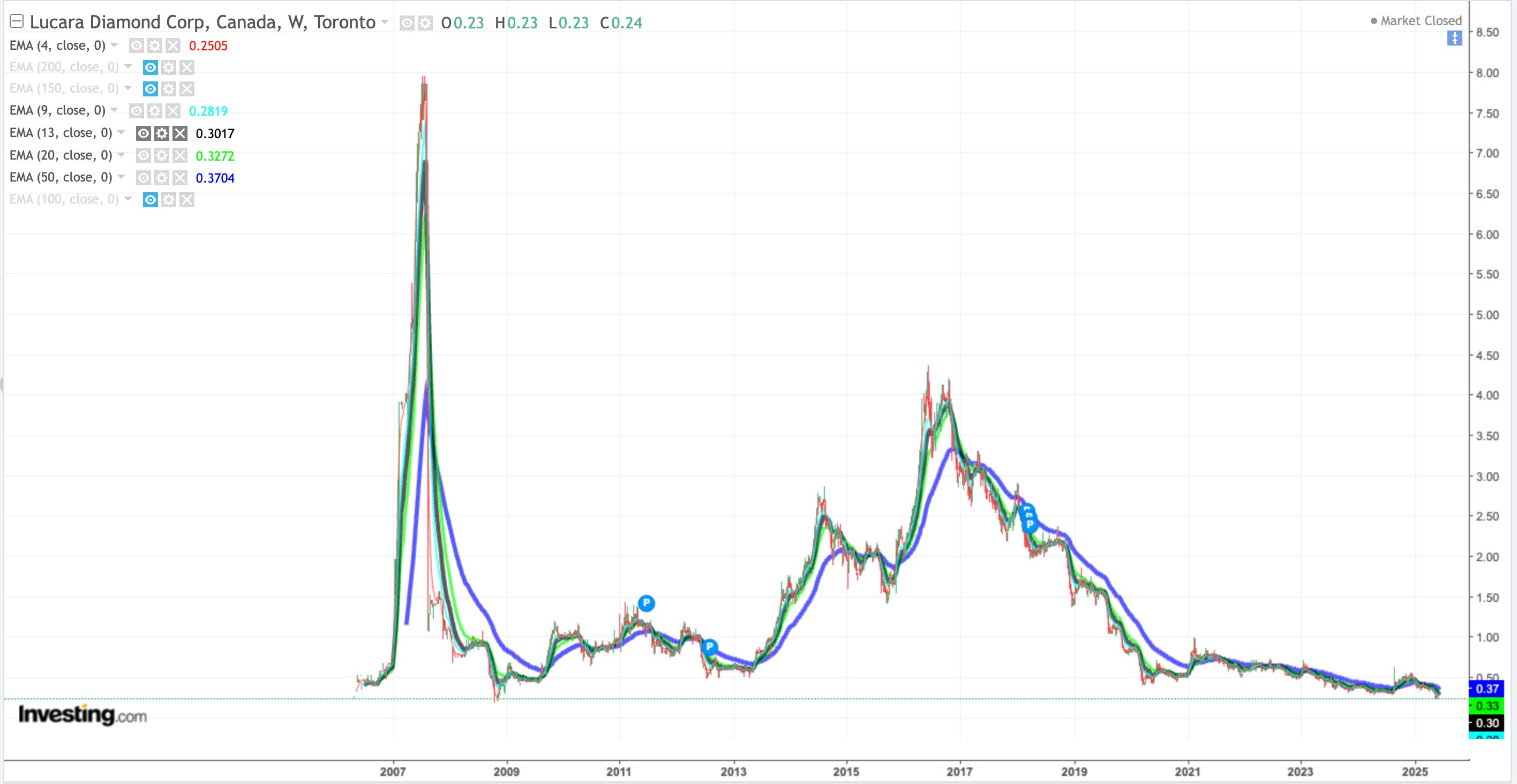
Diamonds are Forever

Diamonds – A Generational Opportunity to Buy
Round diamonds in all carats are down since 2008, with 0.5 to 1 carat round diamond prices down almost 50%.
The Cycle: Commodity Cycle
Sub-sector Cycle - Diamonds
Diamonds are a commodity, and one of the last remaining commodities to move in this commodity supercycle. This is HUGE. We are in the first stage of the diamond cycle.
Has it bottomed? Maybe at the end of last year, and has reaccelerated.
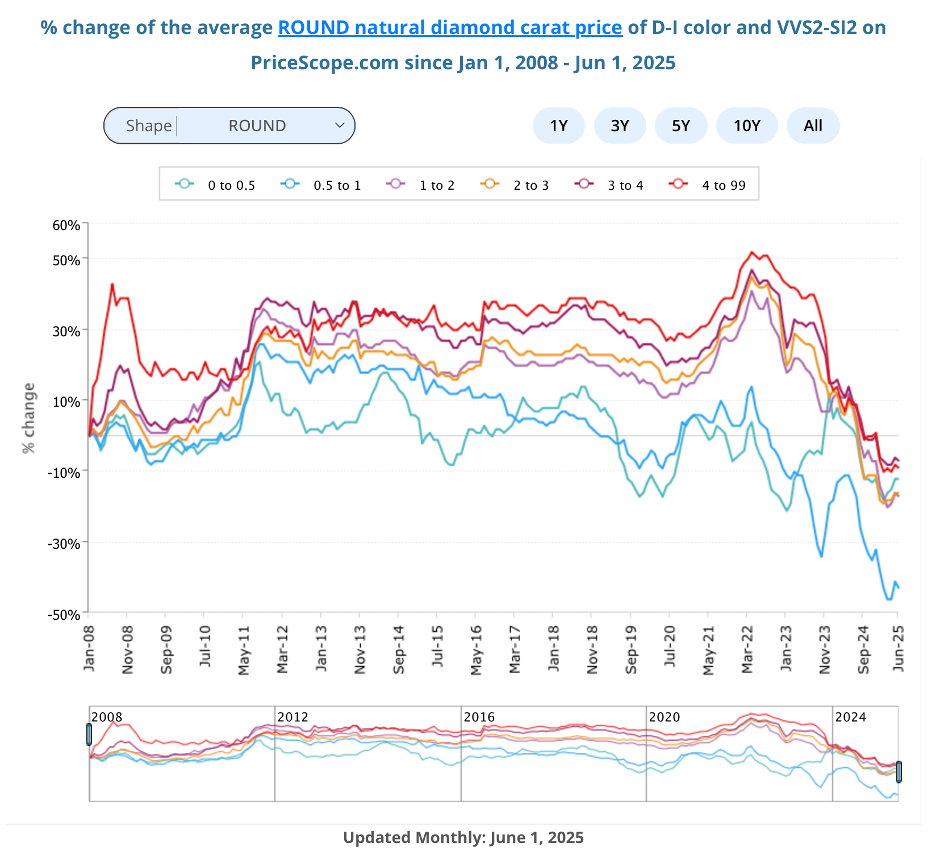
If you account for inflation, which in Canada has risen by 43.96% and in the United States by a similar amount, diamond prices are down significantly in real terms.
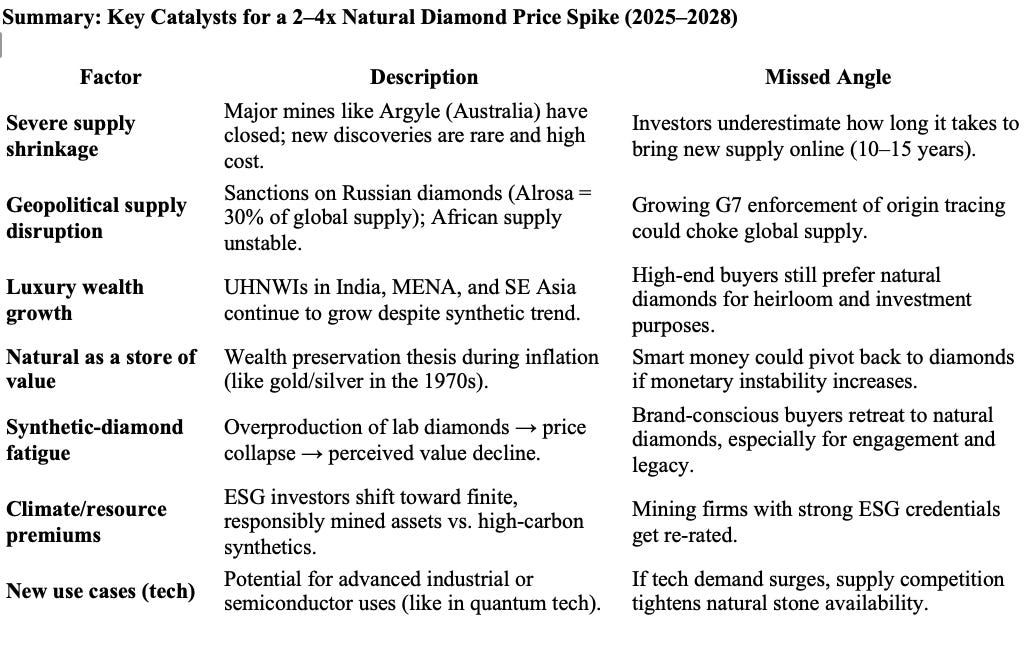
Deep Dive: Synthetic vs Natural Demand Trends
Current Trends
Lab-grown diamonds have grown massively—now ~50%+ of bridal market by volume in the U.S.
But natural diamonds still dominate by value, especially for stones over 2 carats.
Lab diamonds dropped up to 80% in price over 5 years; some jewelers now refuse to buy them back.
Why Natural Diamonds Still Hold Unique Value
Emotional/perceived value ("realness")
Finite global supply (true scarcity)
Traceable heritage/legacy items (in demand among collectors and HNWIs)
Natural diamonds appreciate over time, especially colored stones or rare cuts
1970s Parallel: What Drove Diamond Inflation Then?
In the 1970s:
High inflation led to hard asset investing (gold, diamonds, real estate).
Global tensions (Cold War, oil shocks) created capital flight into portable wealth.
De Beers cartel was intact, tightly managing supply and marketing (“A diamond is forever”).
Now, the cartel is weakened—but similar inflation + instability + wealth defense themes are re-emerging.
How This Ties into the Commodity Supercycle
The next phase of the commodity supercycle (2025–2028) may favor "under-owned, under-supplied, non-replicable hard assets."
Diamonds could re-rate like uranium, silver, or lithium if scarcity and value rediscovery occur.
Missed by the Market?
Sanctions enforcement: G7 traceability rules could remove 30–40% of global supply from circulation faster than anticipated.
Synthetic backlash: Price collapse of lab-grown may cheapen their brand image, creating a luxury vacuum natural diamonds fill.
Tech encroachment: If natural stones find new high-tech industrial use (like quantum optics), this will tighten supply drastically.
Luxury as defense: In a stagflationary environment, diamonds could be seen not as luxury, but as inflation hedgesby UHNWIs.
If You’re an Investor or Strategist:
Look for small-cap miners with limited production, zero debt, and ethical sourcing.
Track enforcement of Russian diamond bans.
Watch wealth and gifting trends in Asia and the Middle East.
Monitor synthetic price action—further crashes may ironically be bullish for natural stones.
Strategy Notes for Investors:
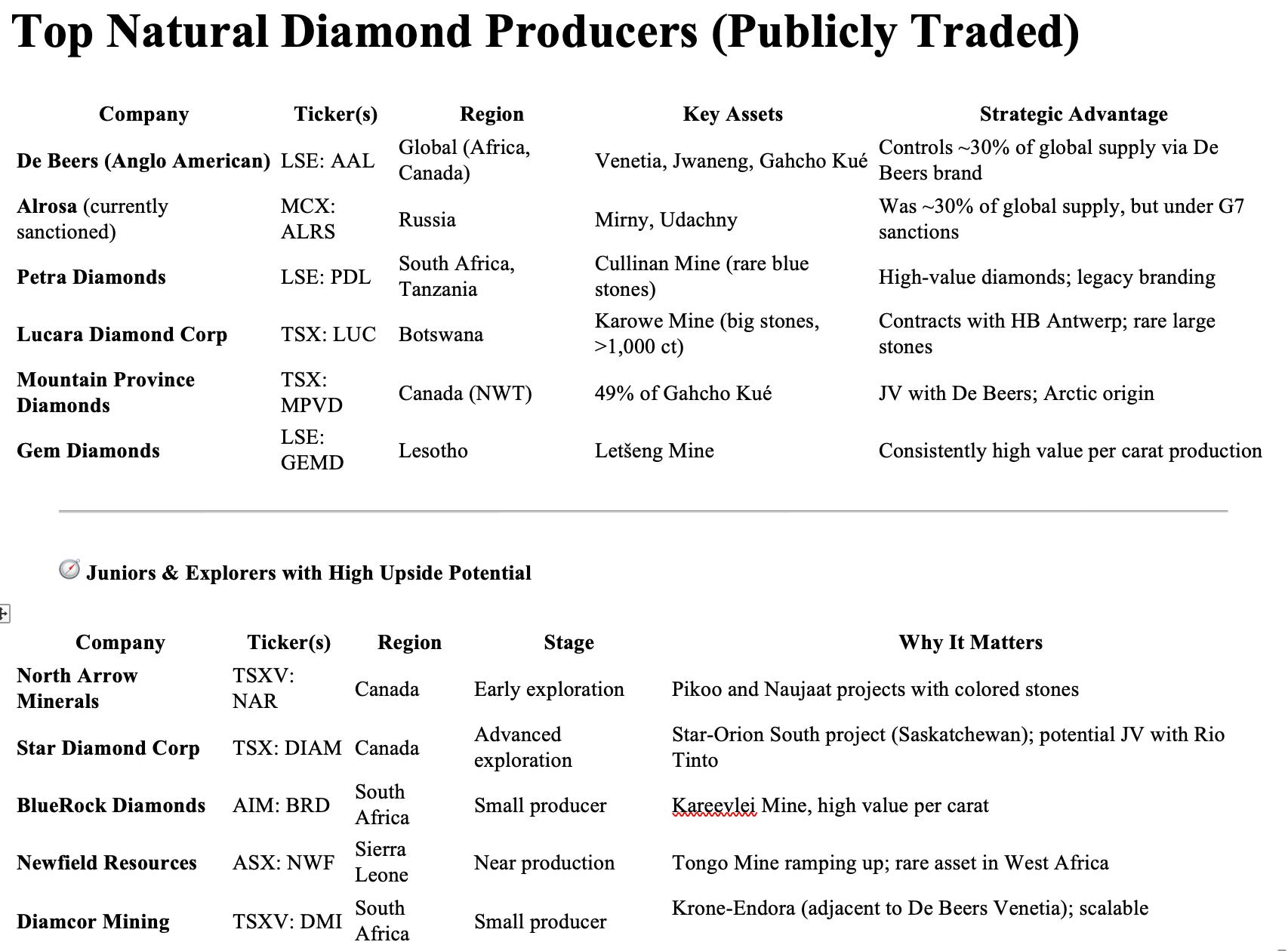
Focus on jurisdictional safety (Canada, Botswana).
Look for firms with large-stone potential or colored diamond production.
Watch for signs of buyout interest or supply agreements with luxury brands.
Traceability and conflict-free origin verification will be key valuation drivers.
·
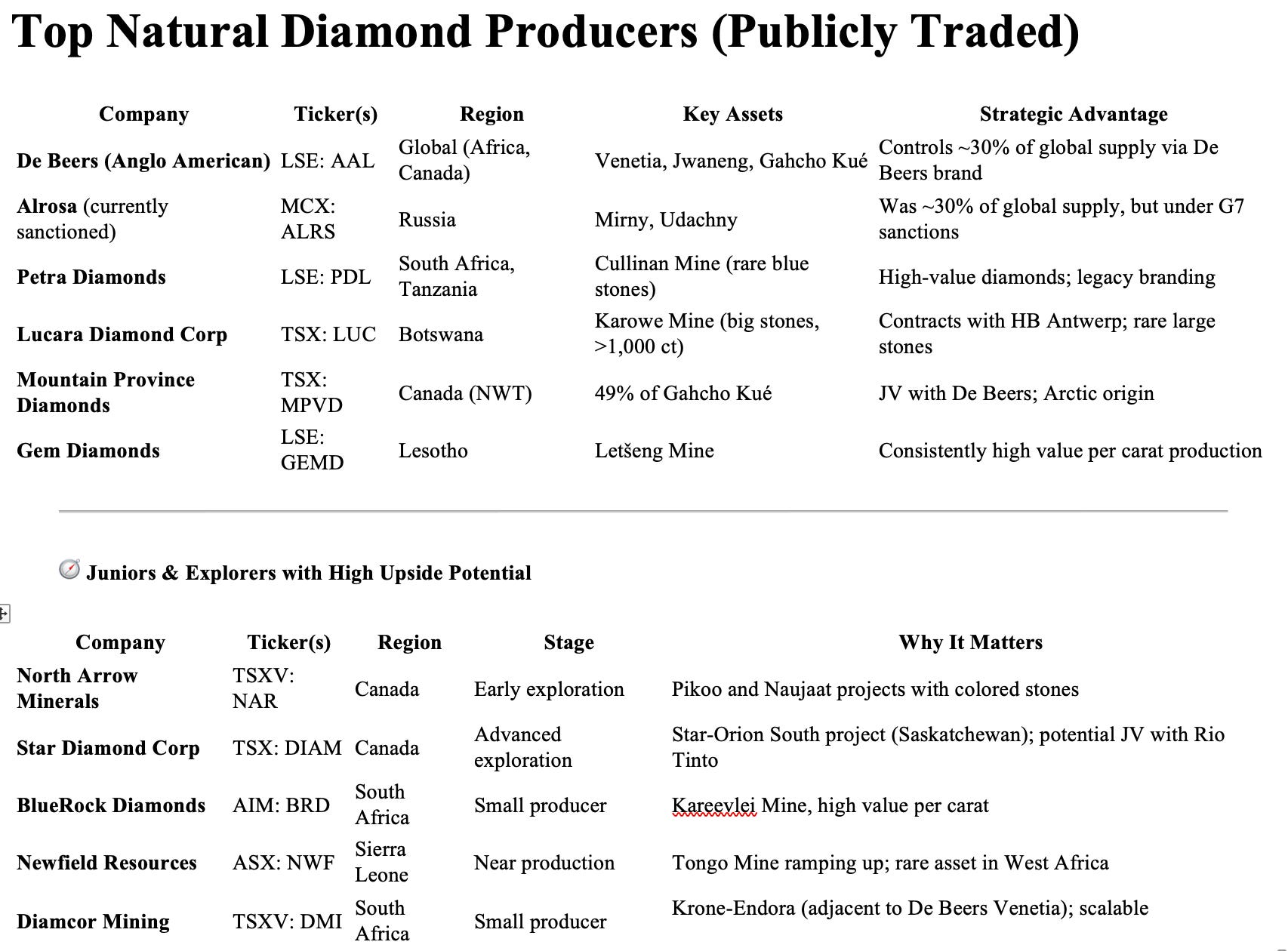
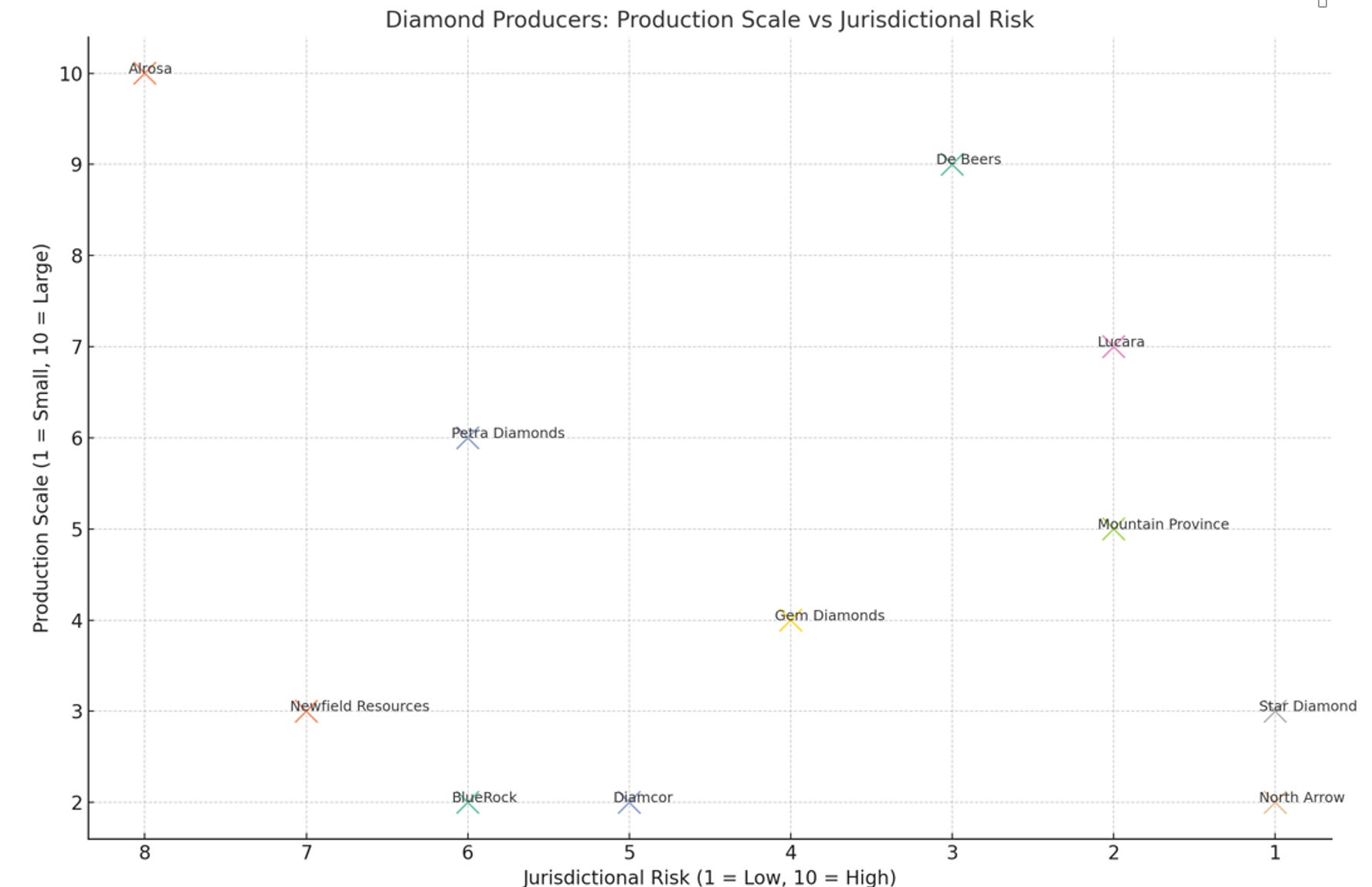
Lucara Diamonds presents an opportunity to buy not yet, but above 0.31 when we see the momentum to be confirmed.