
Cannabis
Something big is about to happen

Cycle Context:
Commodity Supercycle: Cannabis is in the early phase.
Sector Stage: Entering the early accumulation phase of a new uptrend after a multi-year correction.
Investor Sentiment: Recovering from deep pessimism (2022–2024), retail and institutional interest returning.
Where Are We in the Cannabis Cycle?
From 2017 to 2021, the cannabis sector experienced a classic hype phase—sky-high valuations, explosive store openings, and euphoric investor expectations. But as is typical of emerging commodity-linked sectors, this was followed by a brutal correction from 2022 to 2024, marked by oversupply, cash burn, and regulatory stagnation.
Now in 2025, we are entering the early recovery phase of the cannabis cycle—driven by product innovation, regulatory tailwinds, and financial discipline.
This is the phase where smart retail investors re-engage: valuations are still low, but fundamentals are quietly improving.
1. THC Beverages & Microdosing Will Drive the Next Wave of Adoption
Curaleaf (FormulaX) and Tilray (Happy Flower) are launching fast-acting THC drinks that are being positioned as wellness-oriented alcohol alternatives.
Consumers are migrating toward discreet, dose-controlled formats (e.g., 5–10mg drinks, strips, mints, microgummies).
Legal workaround: distribution through alcohol channels (Total Wine, ABC) provides mainstream shelf space.
💡 Expect: A wave of beverage-led revenue growth and cross-industry M&A with alcohol companies entering the space.
2. Regulation Is the Catalyst Investors Are Watching
Federal rescheduling (Schedule I → Schedule III) could pass as early as 2025, enabling tax relief and wider banking access.
SAFE Banking 3.0 may finally pass, improving debt access and lowering capital costs for operators.
International exports (esp. from LatAm & Europe) are accelerating; Curaleaf’s international segment grew 62% YoY.
Expect: Higher margins, more IPOs, M&A, and ETF inflows if 280E tax burdens are lifted.
3. Capital Discipline Over Hypergrowth
Operators like Green Thumb and Curaleaf are shifting from empire-building to profit-first strategies.
GTI announced a $50M share buyback. Curaleaf is closing underperforming stores.
Companies are exiting zombie markets (e.g., bulk flower in CA) and reallocating to limited-license, high-margin states.
💡 Expect: Higher cash flow, leaner balance sheets, and private equity/alcohol conglomerate interest.
Key ETF
Cambria Cannabis ETF (TOKE): Down more than 80% from its all-time high, this ETF has rebounded over 50% year-to-date, with rising volume and broad-based accumulation. Chart shows a multi-month base with potential for a long-term reversal. An actively managed/global equity ETF targeting cannabis companies globally (roughly 20‑50 top cannabis companies). Provides exposure to the cannabis sector for investors without buying single equities. Cambria Funds+1
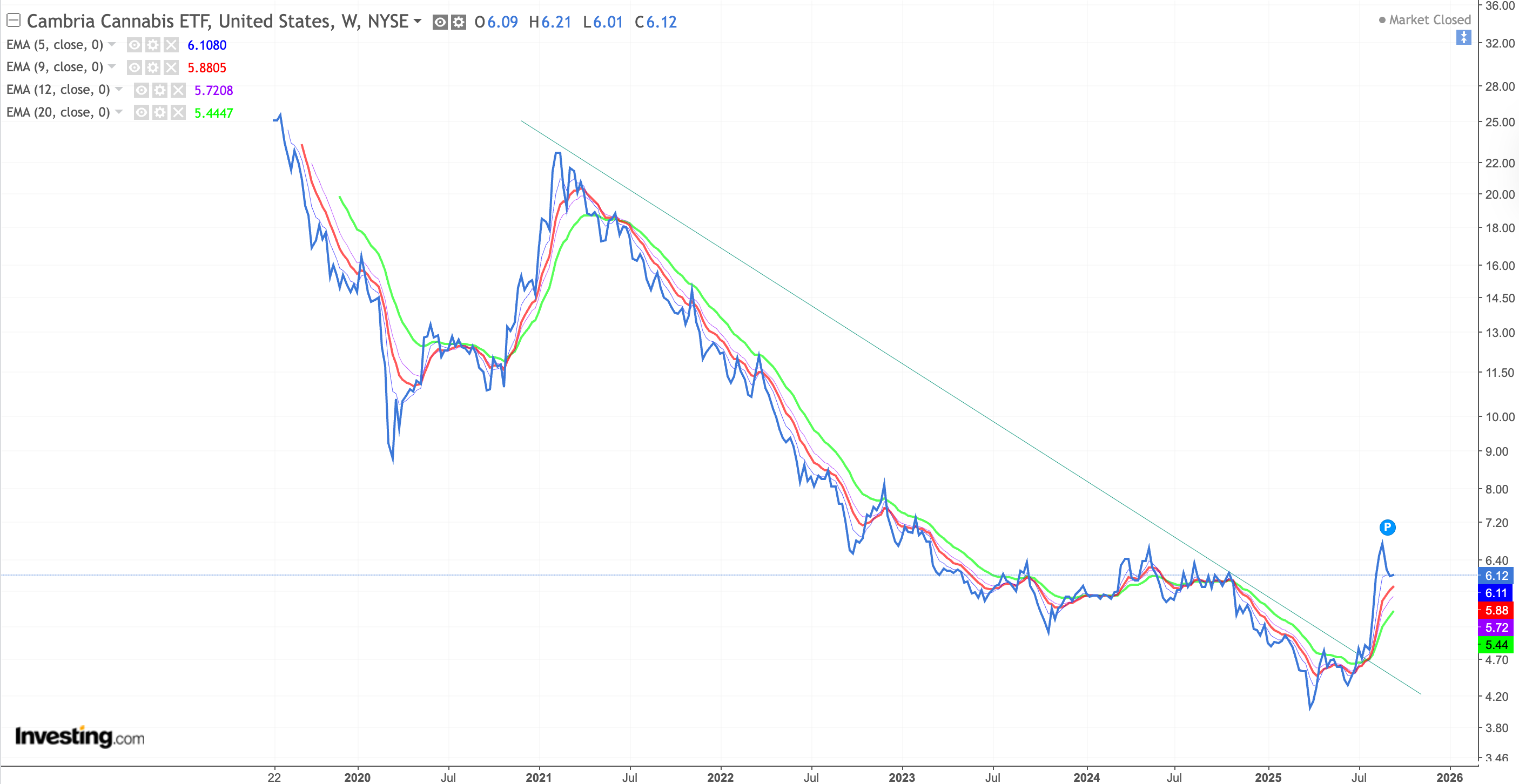
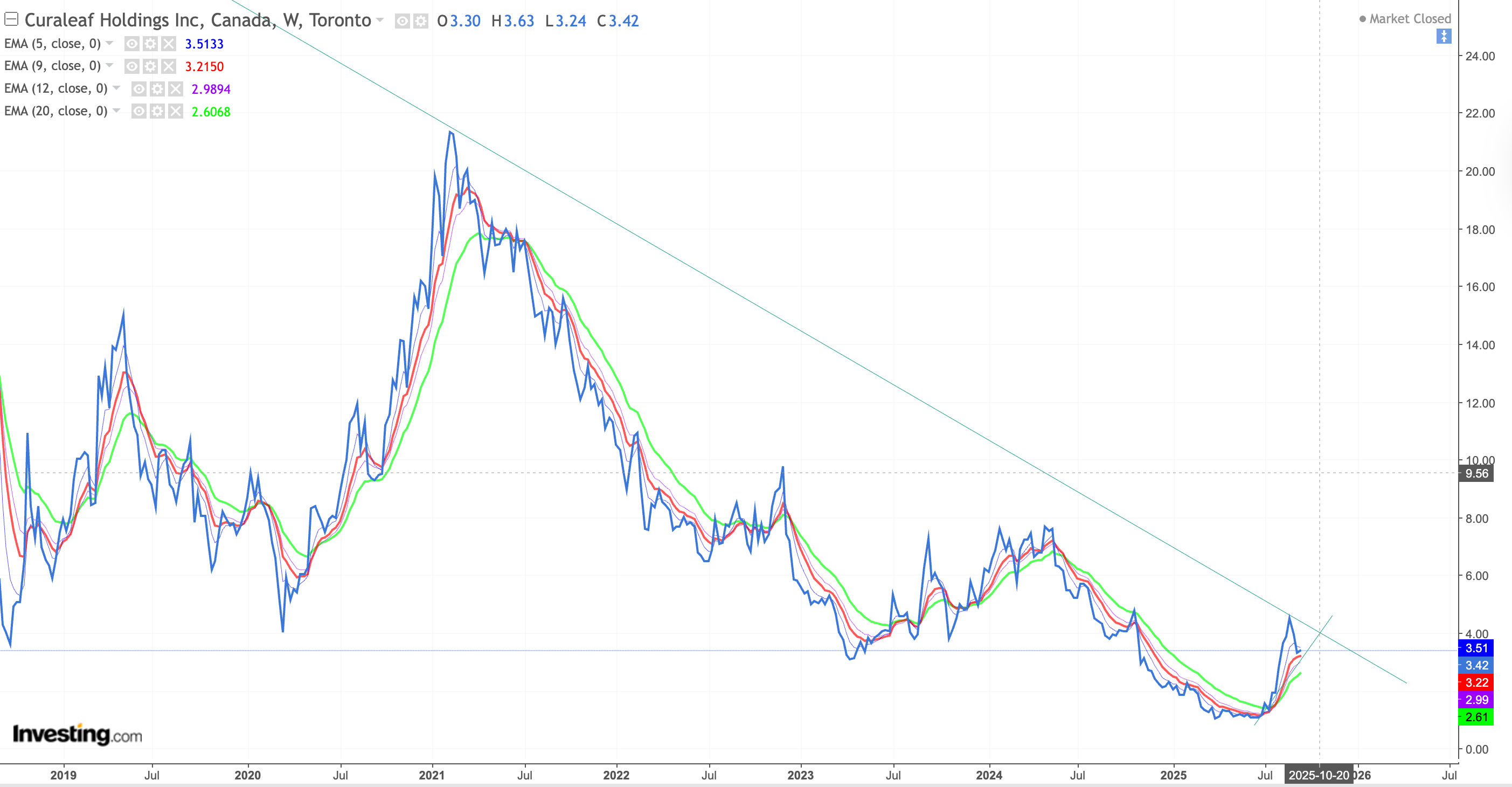
Curaleaf (TSX:CURA) - Cambria Cannabis ETF (TOKE): Down more than 80% from its all-time high, this ETF has rebounded over 50% year-to-date, with rising volume and broad-based accumulation. Chart shows a multi-month base with potential for a long-term reversal.
Curaleaf is multi‑state cannabis operator (MSO) producing & selling cannabis products (flower, edibles, vapes, etc.), with a retail/distribution footprint and international operations. They also have been leaning into hemp‑derived THC / drink and wellness adjacent products. (https://stockanalysis.com/quote/otc/CURLF/)
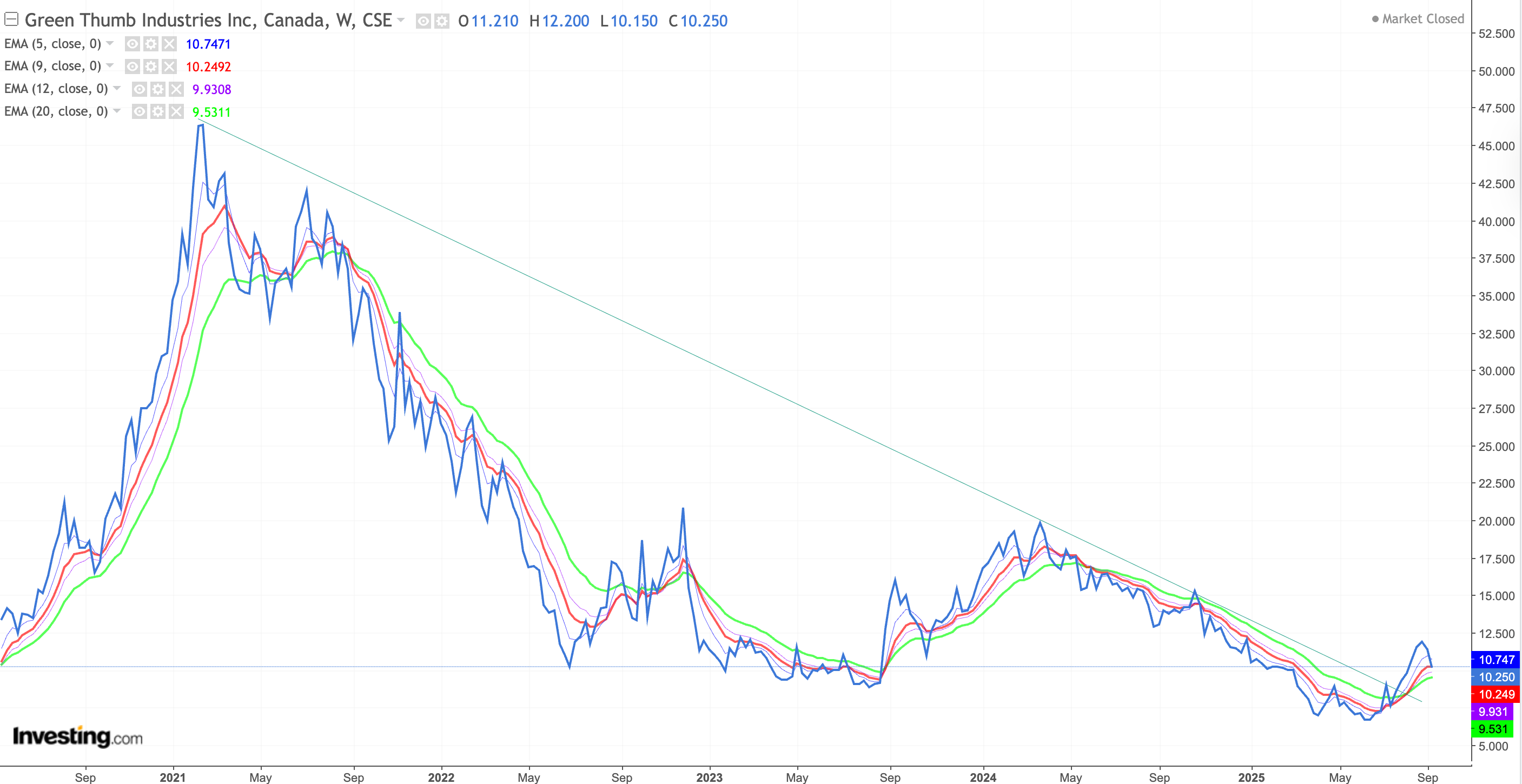
Greenthumb TSXV:GTII
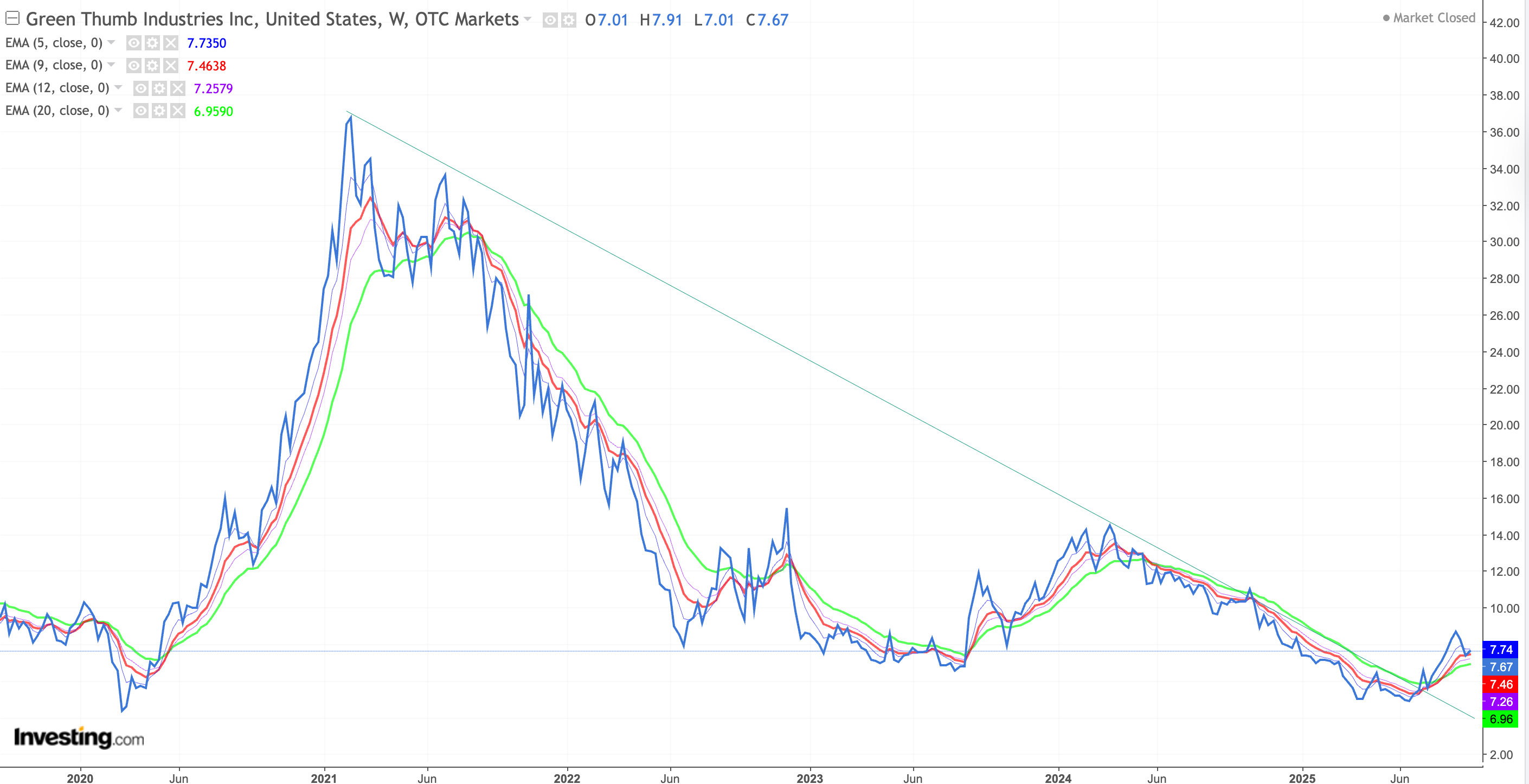
Green Thumb Industries (TSX:GTII / GTBIF): Also bottomed after a multi-year decline and is showing early breakout behavior, including higher lows, positive MACD crossover, and a reclaim of key technical levels.
4. ETFs & Institutions Are Reawakening
Cannabis ETFs (e.g. TOKE, MSOS, YOLO) have bottomed and are now rebounding.
One leading ETF fell >80% from ATH, but is up 50% YTD.
Curaleaf was down 94% from its peak; now regaining momentum as investor optimism returns.
Expect: Institutional flows to return as regulatory clarity increases and margins stabilize.
The cannabis sector is entering a new early-stage bull cycle, driven by:
Regulatory shifts (rescheduling, SAFE Banking)
Functional product innovation (THC beverages, wellness stackables)
Strategic M&A and buybacks
Institutional ETF interest returning